
Managing for wildlife habitat
Wildlife and forest management are not only compatible, but are interrelated. Developing an active management plan allows you to place a special emphasis on wildlife species you are interested in, while improving forest productivity and increasing bio-diversity, beauty and personal enjoyment.
Linking the forest and wildlife
Wildlife have four basic requirements: food, cover, water and space. Different wildlife species require different stages of forest growth to meet these needs. Several aspects of your property determine how many species can live and thrive in your forest - plant cover, harvest operations, water resources and topography.
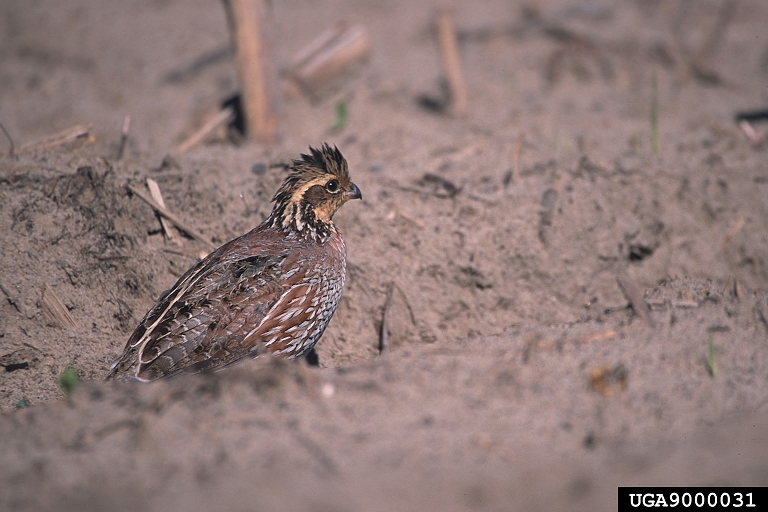 |
| Bob-white quail |
Your forest may have streams, swamps, rivers, ponds, and areas that adjoin fields, pastures, roads and other openings. Even managing these "edges" of your forest is crucial to abundant populations of some wildlife species. The relationship between vegetation manage - ment and wildlife species habitat is well established. Understanding relationships is the first step in determining how your ow n forest can be managed to promote the wildlife species you want to attract.
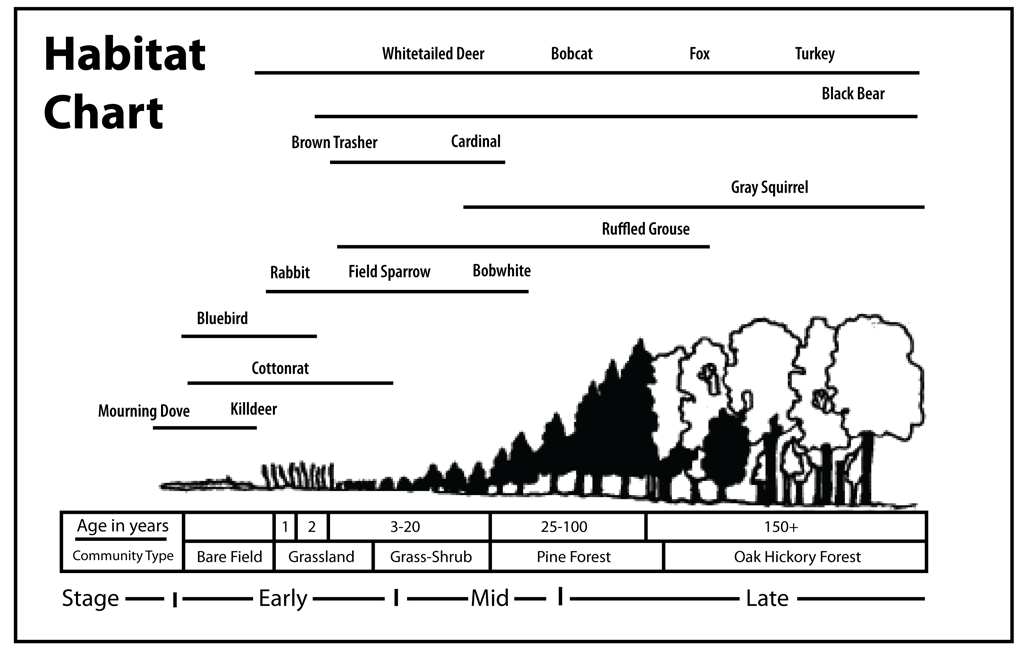
For example, quail and partridge feed on seeds of annual and perennial weeds and grasses that occur in young stands of timbers, where sunlight reaches the forest floor. This is early successional habitat. Pileated woodpeckers depend on dead and rotting trees found in mature forests. This is late successional habitat. Still other wildlife prefer mid-successional habitat.
Management practices impacts on wildlife
Even-aged forests
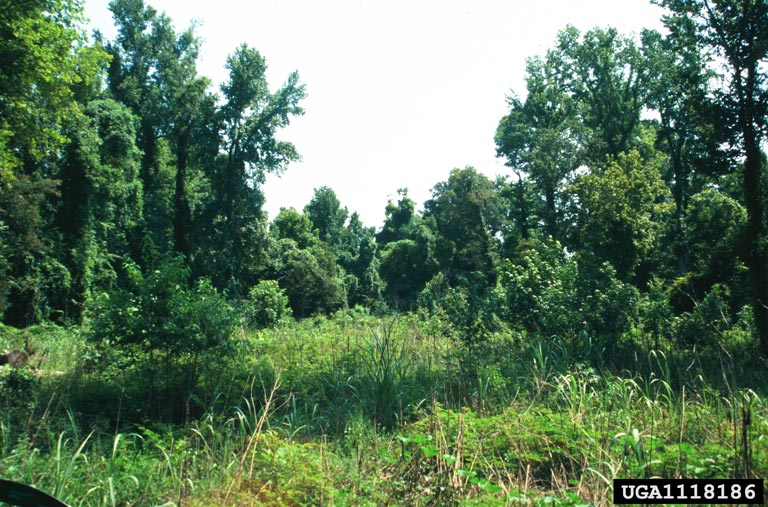 |
| One acre group selection opening |
Young, even-aged forests benefit early successional wildlife species by encouraging forbs, grasses and brush. The size and shape of harvest areas is important. There are several ways you can improve the value of even-aged harvest/regen eration areas for wildlife.
- Small harvest areas (up to 50 acres) scattered over the landscape provide more edge and landscape diversity
- Irregularly shaped areas provide more edge than square or round areas
- Separating harvest areas with 100-foot (or wider) areas of uncut timber enhances diversity of habitats and provides travel corridors between fragmented habitats
- Buffer strips on streams protect water quality, but are also critical wildlife corridors
- Islands of uncut timber within harvest areas will enhance wildlife habitat by leaving mast (food) producing trees. Oaks, hickories, dogwoods, persimmons and berry producing shrubs are excellent hard and soft mast species to leave
Uneven-aged forests
This method simulates minor natural disturbances such as windthrow, insect and disease mortality, or spot fires. Mid and late successional habitat types are maintained with single tree selection. Group selection provides pockets of early-successional vegetation interspersed within the mid and late successional habitat.
Thinning
Thinning stands allows more sunlight to reach the forest floor resulting in more vigorous understory growth. This practice sets back succession at the ground level, yet leaves some mid and late successional trees in the overstory.
Controlled or prescribed burning
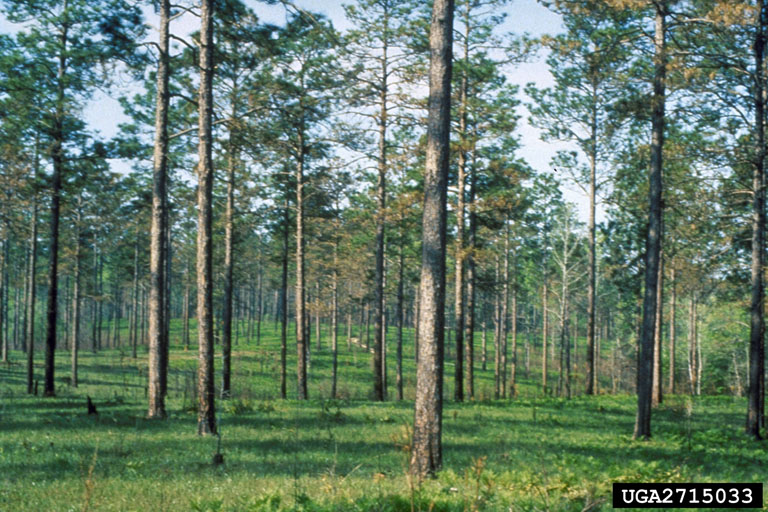 |
| Frequent burns in a longleaf pine stand |
This controls woody vegetation, releases nutrients and increases seed germination and herbaceous vegetation – including legumes and grasses. Controlled burning in stands of fire resistant tree species sets back succession just as a raging wildfire would do, but without the damage to potential timber crop trees. Burning cannot be used in many regions and certain types of forests.
Very light, cool burns are now being used in hardwood forests, particularly to favor oaks which produce important hard mast. Before conducting any burn, consult a professional forester.
Den trees and mast trees
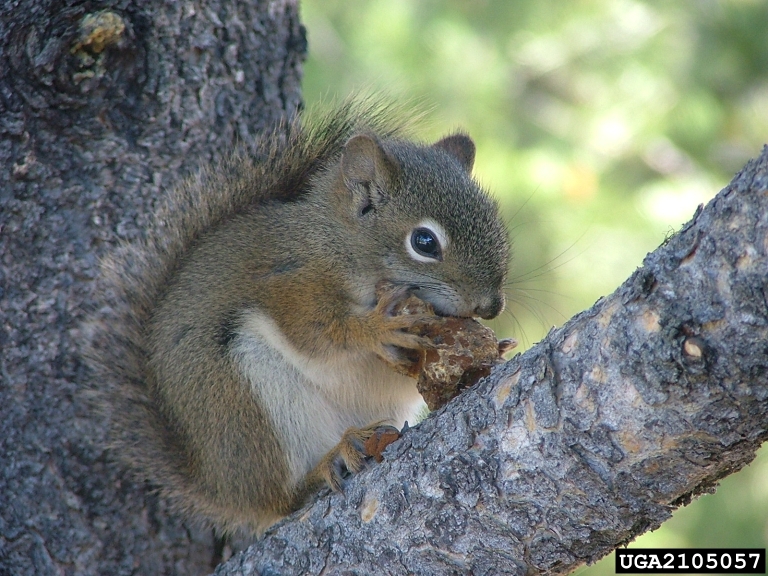 |
| red squirrel |
These trees are critically important for food and cover. Den trees have one or more cavities used by birds, reptiles and mammals for roosting or nesting. As a rule, two to four den trees per acre should be left in any thinned or harvested area.
Small den trees might house chickadees, woodpeckers, screech owls or flying squirrels. Large den trees are used by squirrels, raccoons, wood ducks and occasionally, even a bear. Mast trees produce fruits and nuts used by wildlife for food. Hickory, oaks, beech, persimmon, serviceberry, black gum, hollies, hawthorns, dogwoods, grapevines and many other species are valuable to wildlife. The ideal time to select and mark den and mast trees is before you thin or harvest your timber.
Road construction and maintenance
Access to your property is essential and can provide multiple benefits. Proper location, design and construction increases the value and enjoyment of your forest. One practice that benefits wildlife is 'daylighting.' In this process, trees shading the road surface are removed. Sunlight on the road surface enhances the growth and proliferation of grasses and weeds which are food plants for wildlife. Insects attracted to the vegetation are also an important food source for many wildlife species.
Restricting vehicle traffic also increases wildlife use, particularly during nesting season.
Establishing ground cover or wildlife food plots
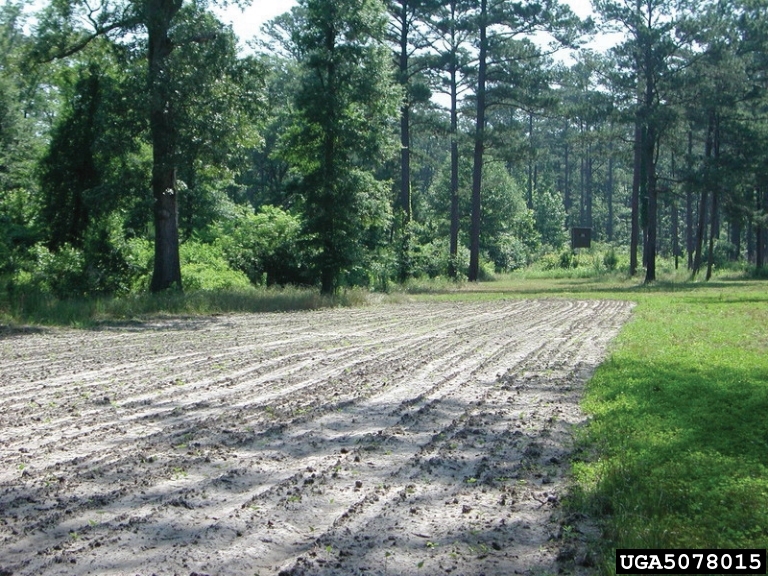 |
| food plot |
Along roads, forest edges, logging decks, in created openings, food and ground cover vegetation controls erosion, improves water quality and can enhance wildlife food and cover.
Seeding and establishment recommendations vary widely depending on geographic region, soil type, moisture availability and fertility. Successful plantings require soil testing, fertilization, adequate seedbed preparation and planting at the appropriate time. Most ground covers require maintenance by mowing, discing, burning, fertilization or liming. Consult a natural resources professional for specific recommendations for your area.




 Funded by