
Establishing and managing timber stands
Again, while you can devise your own management plan, it is recommended that you seek the assistance of a professional forester in developing one. Generally, management practices fall into three categories depending on the age and condition of the forest: 1) forest establishment or regeneration; 2) intermediate stand management practices; and 3) harvest systems.
The range of practices used over the life of a forest is called the "silvicultural system." It is the linking of timber harvesting, regeneration and intermediate stand management treatments in a logical sequence to meet your goals and objectives.
The young stand
Establishing or regenerating a forest can be achieved by either artificial means - primarily planting trees - or by natural methods - which rely on seed, sprouts and/or naturally occurring seedlings. These practices are used to re-stock the forest with desirable trees.
Site preparation
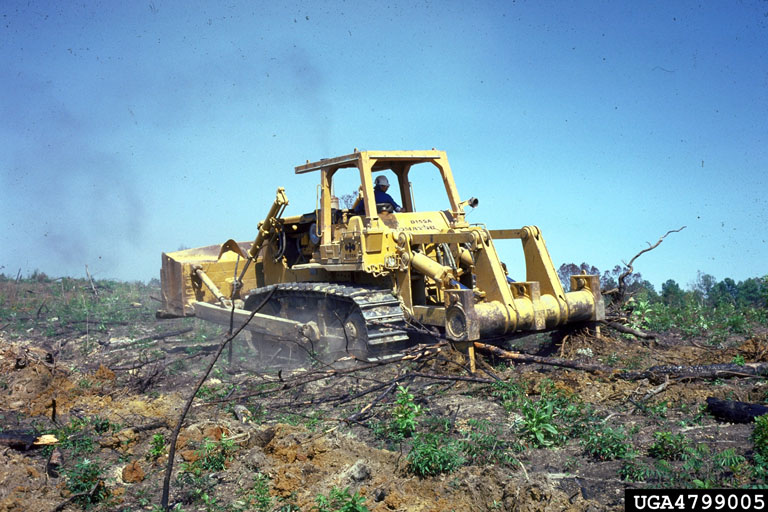 |
| Mechanical site preparation |
Removing undesirable vegetation or preparing a seedbed may not be needed if the site is clean enough. Site preparation is one of the most intensive, disturbing activities that must be done using BMPs to protect water and soil quality. Depending on the soil type, soil moisture, geographic region and the type and the density of the weed population of the site, different methods can be used to clear the site. These include fire, herbicides, manual labor or heavy mechanical equipment.
Natural regeneration
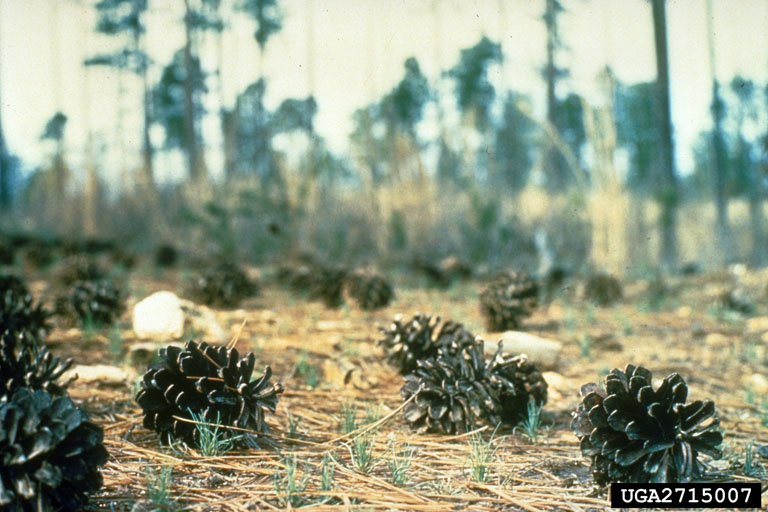 |
| Newly germinated seedlings |
This is the cheapest method to reproduce a stand. It relies on available seed, stump sprouts and existing seedlings to produce the new stand. Success depends on whether there is adequate seed, seedling or sprout supply; adequate moisture; a well-prepared seedbed; and control of competing vegetation. Careful planning is required to ensure success.
Artificial seeding
Seed can be sown by either spreading from ground-level or by broadcasting by air over the site or in spots. Success will be determined by many of the same factors that affect natural regeneration.
Tree planting
 |
| Hand planting |
This lets you pick the type of tree (species) and the spacing of the seedlings. It will be successful if the selected species is/are well adapted to the site, of high quality, healthy and carefully planted. In rare instances, seedlings may need to be treated with insecticides or fungicides to pr otect from early death. Tree planting may be done by hand or machine. Planting on the contour is advised to protect water quality.
Weed control
This can be done by hand, mechanical means or herbicides to control grasses, brush and annual or perennial weeds, which choke out or stunt the growth of seedlings. Extreme care must be used to avoid water contamination with pesticides.
Fertilization
If a soil test indicates a critical shortage of one or more nutrients, the best time to adjust fertility is at the time of the stand's establishment. Best management practices dictate that only the needed amount of fertilizer is applied and care is taken to prevent water pollution from fertilizer.
The middle-age stand
Your forest will be healthier and more productive if it is tended. Managing established intermediate stands includes manipulating: the stocking (number of trees per acre); species composition; and competition levels. Generally speaking, trees or weeds that do not contribute to your objectives for timber production, wildlife, aesthetic or recreational goals can be eliminated in favor of more desir - able components in your stand.
Weeding
 |
| Brush saw |
This is usually done in very young stands by hand, mechanical or chemical methods. Usually both brush and herbaceous weeds are not marketable, so are killed in place. As they rot, the recycled nutrients become available to your forest.
Release
This is a form of weeding, but concentrates on removing the overtopping shade from desirable crop trees. It is not uncommon for hardwood sprouts to grow rapidly, quickly overtopping planted seedlings. Without release, crop tree seedlings' early growth can suffer, or they may die.
Thinning
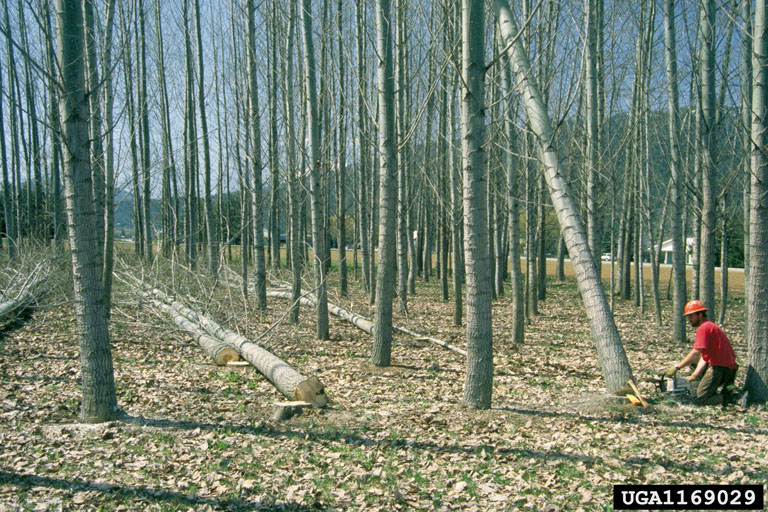 |
| Row thinning hybrid poplar |
Enough space is needed for the development of selected crop trees. Precommercial thinning removes small trees, which are not yet marketable. In older stands, thinning may produce some income from the removed trees.
Thinning is usually done in even-aged stands when the tree crowns become so dense the trees start to shade each other. Failure to thin will cause the growth rate and vigor of the crop trees to diminish. Also, unthinned stands are more vulnerable to disease and insect infestations and they will take longer to reach marketable size.
By allowing more sunlight to reach - not only the total crown of selected crop trees - but also the forest floor, low vegetation will grow and provide food and cover for many wildlife species.
Improvement cutting and timber stand improvement
Timber stand improvement (TSI) is a cutting or culling of undesirable species, usually in a sapling stand of less than 4-inches in diameter. By removing undesir - able species and poorly formed, diseased or insect-infested trees, TSI improves the species composition and stand quality.
Trees may be girdled or killed in place by herbicide, or removed to use as firewood. Improvement cuttings are done in older stands to accomplish the same result, but the stems removed are sold.
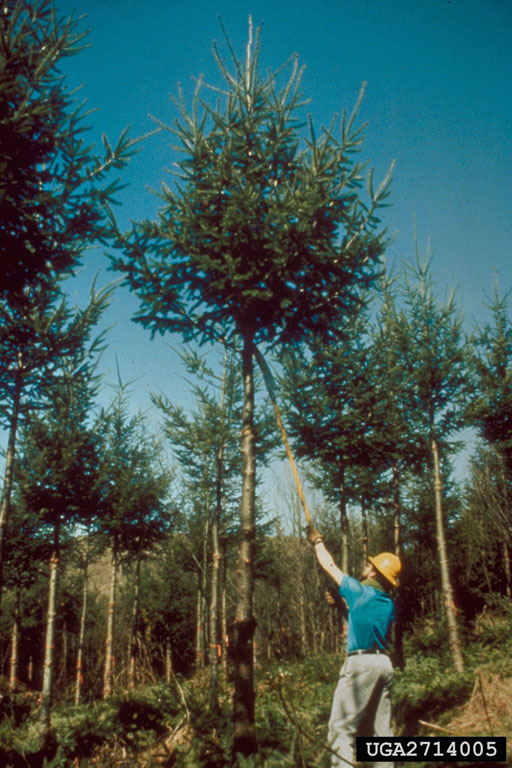 |
| Pruning Douglas-fir |
Pruning
Removing persistent low branches improves wood quality by keeping knots to the center of the tree and increases the percentage of valuable clear and knot-free wood production. Pruning is best done when branches are less than 2-inches in diameter and the stem diameter is less than 4-inches.
Controlled or prescribed burning
This lowers the risk of wildfire, as well as the population of undesirable wood species. Many species, such as some pine are tolerant of `cool' fires under controlled conditions. It can be used to get rid of buildups of leaves, needles and other fuels that can ignite and cause a major wildfire, as well as removing less fire-tolerant tree and brush species.
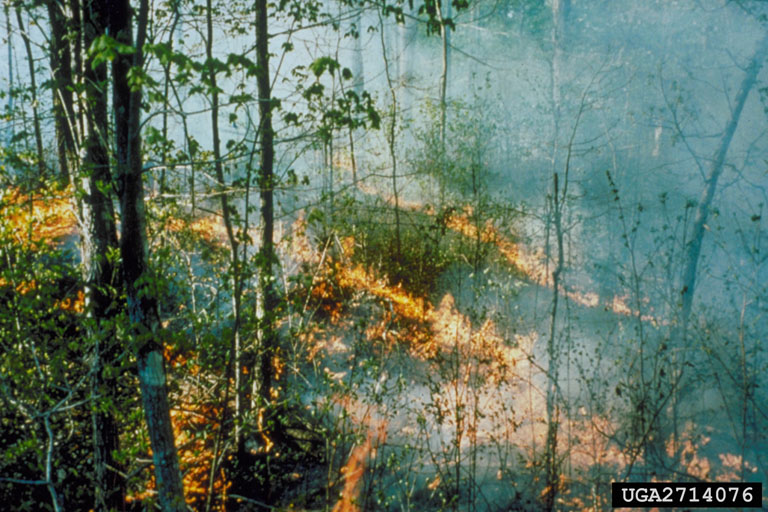 |
| rescribed burn in upland hardwoods |
An added benefit to prescribed burning is the stimulation of many herbaceous species of plants that provide food and cover for certain wildlife species.
Fertilization
Unlike fertilization applied at establishment, intermediate stands need nitrogen to increase the growth and yield of the forest. When there is enough sunlight, water and other nutrients, trees - just like corn - will respond to nitrogen with larger, more productive foliage. To determine if this would be a cost-effective practice for use in your forest, it is best to talk to a professional forester.
Harvesting the mature forest
Several options can be used that relate to your forest regeneration planning strategy. Actual removal of trees can be by hand or machine felling; moving (skidding) of the stems to a loading area (deck) by machine or livestock; and the loading and hauling of the cut timber to market.
Timber harvesting, skidding and hauling on forest roads and trails are potential causes of erosion, soil degradation and sedimentation. With the assistance of a professional forester, you can make a pre-harvest plan that will result in a good timber sale and harvest contract and adequate oversight of the process to minimize environmental impacts.
Clearcutting
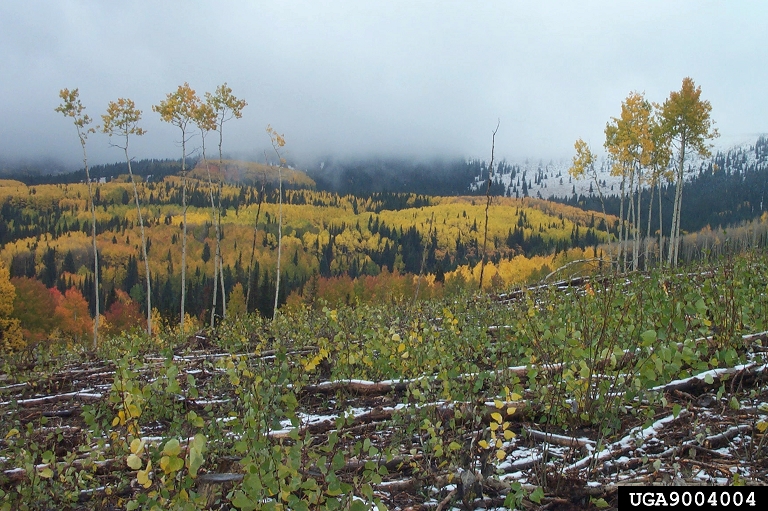 |
| Clearcut with aspen regeneration |
This removes the entire marketable portion of the stand in one cutting. It is the most efficient and easiest to administer and is appropriate for mature stands or where the stand is of poor quality and even-age regeneration is desired.
While clearcutting creates a drastic landscape change that some people object to, many valuable species must have full sunlight for regeneration. However BMPs dictate that it should not be done right next to streams or water bodies.
Seed tree
This method also produces an even-aged forest. It is similar to clearcutting, but four to 20 high quality seed producing trees are left per acre to naturally re-seed the site after harvest. It is crucial to plan the timing of the harvest to assure adequate seedfall. Planning is also required to remove the seed trees after regeneration, since loggers are reluctant to return where there are few trees left.
Risks inc lude either not enough number of seeds or too many seeds, resulting in an under-stocked or overstocked stand.
Shelterwood
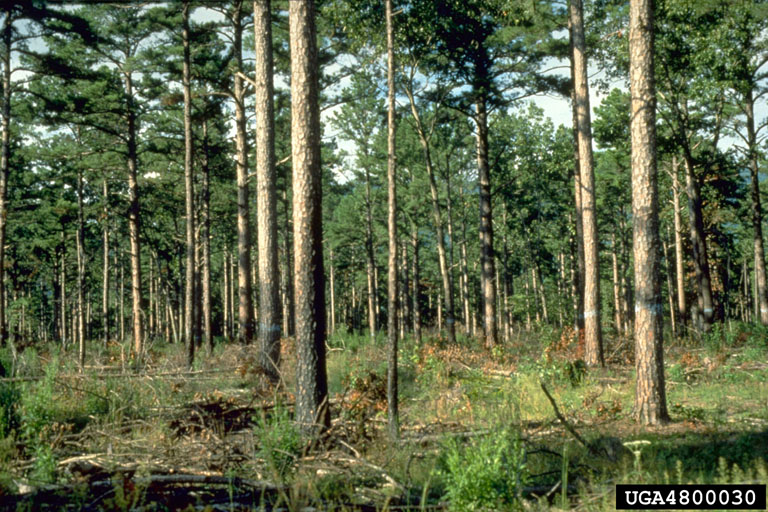 |
| Shelterwood in shortleaf pine |
More seed trees - 21 to 60 - are left per acre in this method, which can be described as a heavy seed tree harvest. This harvest is a preferred even-aged natural regeneration system for non-prolific seed producing species, and as a visually appealing system for hardwood and conifer species.
It provides an abundance of seed and shelter for seedlings, as well as residual shade to control weeds. Since there is a larger number of trees left, loggers are more willing to return and remove the shelter trees after regeneration is established, usually within three to five years.
Shelterwood with reserves
Also called deferment cuts, these selected trees are left to mature until they grow large enough to produce a valuable saw log.
Selection
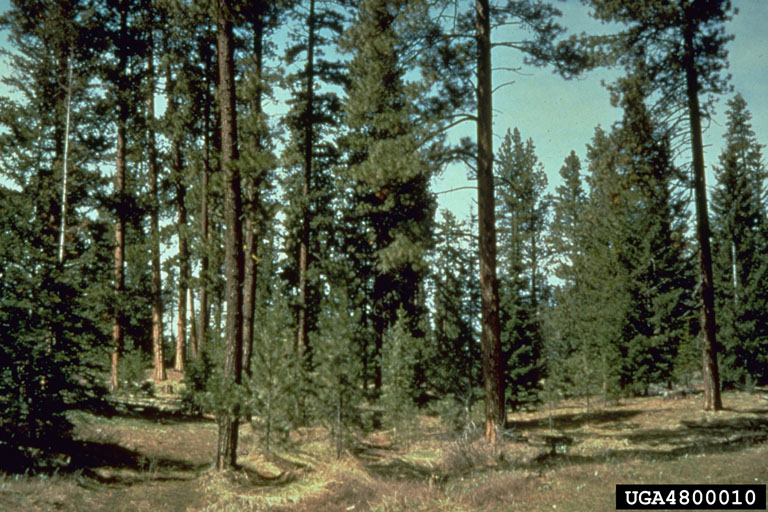 |
| Group selection in Ponderosa pine |
This system regenerates uneven-aged stands of shade tolerant tree species. Single tree selection removes scattered individual trees, while group selection removes scattered groups of trees to create openings of 1/40 to 1/2 acre in size.
Selective harvest doesn't work with valuable shade intolerant or moderately shade tolerant species, including many pine and quality hardwoods. While this method removes financially mature and high risk trees, care must be taken to not just remove the biggest and best trees, leaving poor quality trees behind. This practice, 'high grading', results in a badly degraded forest with little timber value.
There are many advantages to selective harvest—frequent income and visual attractiveness. A major disadvantage is that it requires more roads and trails, which greatly increases the potential for erosion and sedimentation.
Other considerations
Wildfire, insects, diseases and overgrazing are destructive to your forest. Frequent visits by you and a professional forester are recommended to ensure firebreaks are maintained, provide evaluation of your forest's health and vigor, and protect your investment.




 Funded by